By alphacardprocess March 9, 2026
Getting approved for a merchant account is one of the most important steps in setting up reliable payment processing for Pennsylvania businesses.
Whether you run a retail store in Pittsburgh, a contractor business in Harrisburg, a medical practice in Allentown, or an online shop serving customers across the state, your ability to accept card payments smoothly depends on more than just filling out an application.
Approval often comes down to preparation, documentation, business transparency, and how a payment processor views your overall risk profile.
That is why understanding the merchant account approval requirements in Pennsylvania matters before you apply. A merchant account is not simply a plug-and-play service.
It usually involves underwriting, identity verification, business review, banking checks, and an evaluation of how your company accepts payments. If something is missing or unclear, the approval process can slow down, become conditional, or in some cases result in a decline.
This guide explains how merchant account approval works in practical terms, what Pennsylvania merchant account requirements typically involve, which documents businesses may need, and what underwriters are really looking for behind the scenes.
You will also learn how business type, transaction method, processing history, chargeback exposure, and sales model can affect approval. Along the way, you will find practical tips to help improve your chances of a smoother approval process and choose merchant services in Pennsylvania that fit your business model.
What a Merchant Account Is and Why Businesses Need One
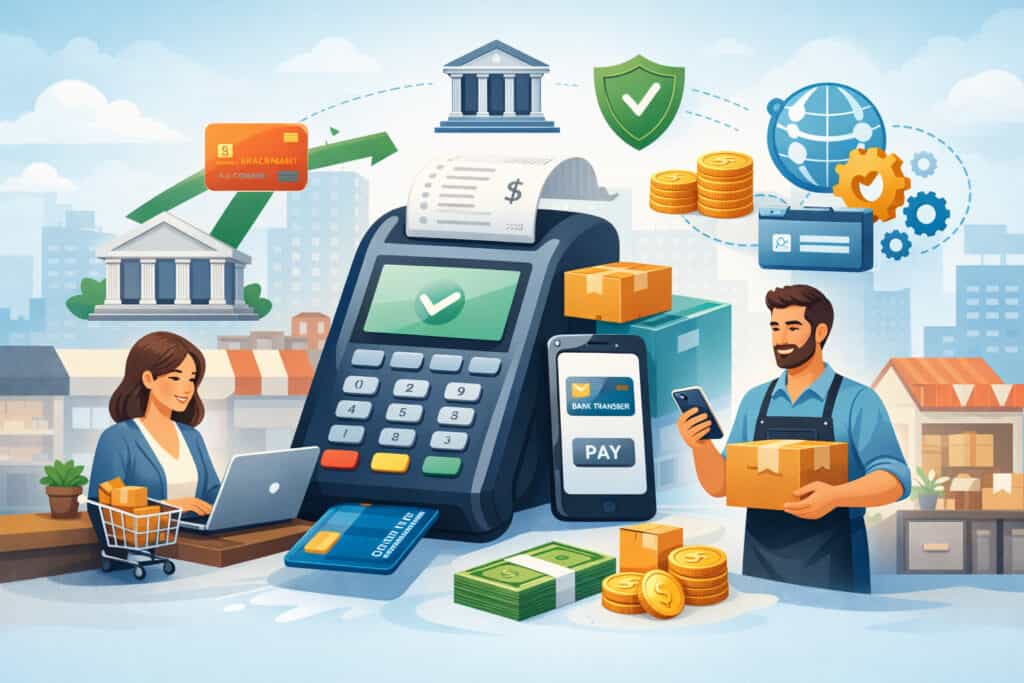
A merchant account is a type of account used to process card payments for a business. When a customer pays with a debit card or credit card, the funds do not usually move directly from the cardholder to your operating account in one step.
Instead, the transaction passes through the payment network, processor, and acquiring side of the payment system before funds are deposited into your business bank account. The merchant account plays a central role in that flow.
For many business owners, the most practical way to think about a merchant account is as the foundation that makes card acceptance possible. It supports in-store purchases, online checkout, mobile payments, invoicing, recurring billing, and virtual terminal transactions.
Without it, many businesses would be forced to rely on cash, checks, or limited payment methods that can slow sales and reduce convenience for customers.
In Pennsylvania, businesses often need merchant services for everyday operations across a wide range of industries. Restaurants use them for countertop and tableside payments. Contractors may use mobile readers to collect deposits on job sites.
Healthcare practices may accept copays in person and send payment links for balances. Online sellers need payment gateways and fraud tools. Professional service businesses often want invoicing, card-on-file, and recurring payment options.
The need for a merchant account also goes beyond payment acceptance. A properly structured setup can help with:
- Faster access to sales funds
- More professional customer checkout experiences
- Better reporting and reconciliation
- Support for chip cards, contactless payments, and e-commerce
- Security tools that reduce fraud exposure
- Integration with point-of-sale systems, software, or accounting tools
A merchant account is especially important when a business wants stability and long-term processing support. While some payment platforms offer quick signup tools, a true merchant account often provides more tailored underwriting, pricing structure, and risk management support for growing businesses or those with more complex processing needs.
How merchant accounts differ from basic payment tools
Many business owners first encounter payment acceptance through simple signup platforms that offer very fast onboarding. Those tools can work well in some cases, especially for low-volume sellers or newer ventures testing a concept.
However, they are not always the same as a traditional merchant account relationship with full underwriting and a dedicated processing setup.
A traditional merchant account typically involves an approval process that looks more closely at the business itself. The provider may verify ownership, check business details, review bank records, analyze your products or services, and assess expected processing patterns.
That extra review can feel more demanding upfront, but it often helps create a stronger long-term processing arrangement.
This matters because payment processors assume financial risk when they approve a business. If cardholders later dispute charges, request refunds, or create chargebacks, the processor may be exposed to losses.
As a result, providers want to understand who they are approving and how that business operates before extending payment processing services.
For Pennsylvania merchant account setup, this distinction is important. A business owner comparing options should understand whether they are applying for a fully underwritten merchant account or a lighter onboarding solution with broader account monitoring and potential funding disruptions later.
Businesses that need dependability, customized support, or industry-specific setup often benefit from a more complete underwriting path.
How Merchant Account Approval Works for Pennsylvania Businesses

The merchant account approval process usually starts with an application, but it does not end there. Once a business submits its information, the processor or acquiring partner reviews the application through an underwriting process.
This review helps the provider determine whether the business is legitimate, financially stable enough for the expected activity, and likely to process payments in a way that fits the provider’s rules and risk standards.
In practical terms, merchant account approval PA businesses go through often includes several layers of review. The provider may confirm your legal business name, tax identification details, business address, ownership information, and bank account.
They may review your products or services, estimate the likelihood of chargebacks, and examine whether you sell in person, online, by phone, or through recurring billing. In some cases, they may also verify your website, refund policy, delivery process, and past processing history.
The process can move quickly for straightforward local businesses with complete documentation. A retail store with a registered business, a business bank account, clear ownership records, and a standard in-person card-present model may be approved relatively fast.
On the other hand, businesses with incomplete paperwork, newer operating histories, online sales, subscription billing, large average tickets, or industries viewed as higher risk may face additional document requests or manual review.
Merchant account providers generally make one of several decisions after reviewing the application. They may approve the account as submitted, approve it with conditions, request more information, or decline it.
A conditional approval may involve reserve requirements, processing limits, delayed funding, or a request for more documentation before full activation.
What happens between application and final decision
Once you submit your merchant account application requirements package, the provider usually begins with an initial screening. Some checks are automated, such as business identity matching, tax ID validation, bank verification, and address consistency. If everything lines up, the file may move to an underwriter for a more detailed review.
At this stage, underwriters are trying to answer a simple question: does this business appear able to process payments responsibly and consistently within the provider’s acceptable risk profile? They are not only looking for red flags. They are also checking for clarity. Missing ownership percentages, mismatched addresses, incomplete business descriptions, or unclear sales methods can all create friction.
For example, if a contractor says the business processes all payments in person but the website advertises online deposits, the underwriter may ask follow-up questions.
If a healthcare office submits an application with no website and no explanation of how patients book or pay, the provider may request invoices, a service agreement, or a description of billing methods. If an online seller has a website with no contact information or refund policy, that can also trigger a review.
The smoother your application, the easier it is for the underwriter to confirm that your business is real, transparent, and operationally sound. That is why Pennsylvania merchant account requirements are not just about documents. They are also about consistency across everything the provider sees.
Common Merchant Account Approval Requirements in Pennsylvania
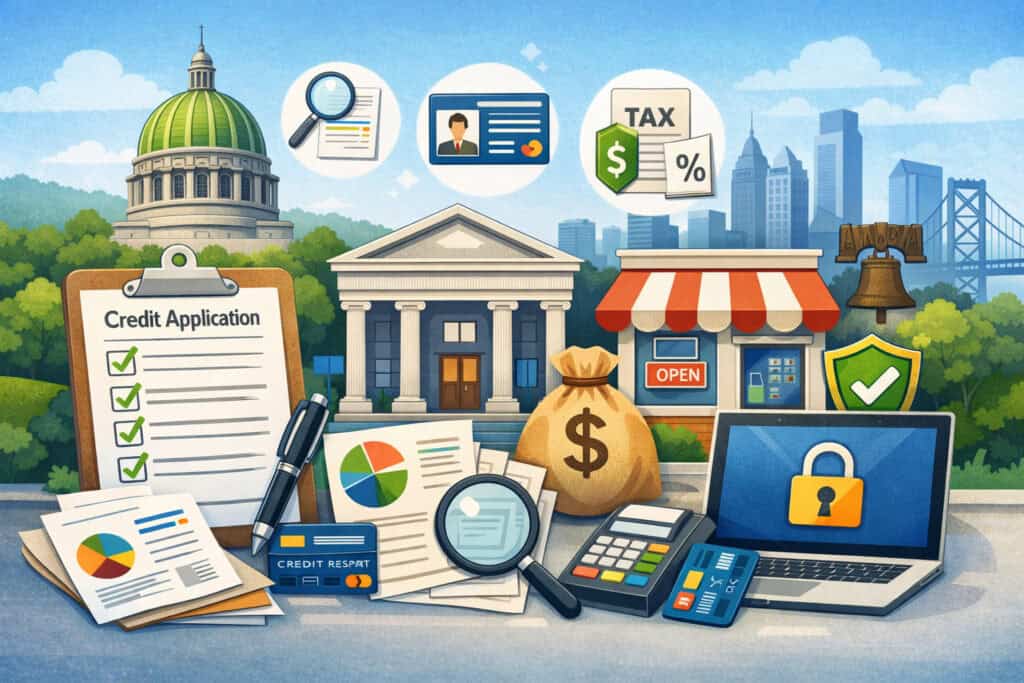
Most providers follow a similar set of approval standards, even though exact requirements vary by processor, acquiring bank, and business type. In general, merchant account approval requirements in Pennsylvania center on verifying who you are, what your business does, how you accept payments, how much you expect to process, and whether the processor can support your activity with a reasonable level of risk.
One of the most basic requirements is that the business must be legally established or operating in a verifiable way. Depending on the business structure, this may involve a registered entity, sole proprietorship records, a tax ID or Social Security number where allowed, and evidence that the business is actively conducting business.
Many providers also expect a business checking account in the legal or trade name of the business so deposits and debits can be handled correctly.
Ownership information is another core requirement. Providers often ask for the name, date of birth, home address, and identification details of owners or controlling individuals. This helps with identity verification and compliance checks. If there are multiple owners, percentages of ownership may also need to be disclosed.
Processing profile details also matter. A processor will usually want to know:
- Estimated monthly processing volume
- Average transaction size
- Highest expected transaction amount
- Primary sales channels
- Whether payments are card-present or card-not-present
- Whether billing is one-time, recurring, or installment-based
- Whether goods are delivered immediately or later
These details help the provider understand how exposure may build over time. A business that collects large prepayments for future services carries a different risk profile than a store selling lower-ticket items at a counter and delivering them immediately.
Pennsylvania merchant account setup may also involve website or digital presence review for businesses that accept remote payments. If you sell online, offer invoices, use subscription billing, or take deposits for future services, a provider may want to see evidence of your products, policies, and contact information.
Even service businesses without a full online store can benefit from having a simple professional site or verified online presence that shows what they do and how customers reach them.
Core information businesses are usually asked to provide
When applying for payment processing for Pennsylvania businesses, expect the provider to request a standard package of business and operational details. Even if the application looks short at first, additional follow-up requests may come later if the account needs manual review.
The most common information includes:
- Legal business name and DBA if used
- Business structure, such as LLC, corporation, partnership, or sole proprietorship
- Federal tax identification details
- Business address and contact information
- Date business started or date of formation
- Names and ownership percentages of principals
- Business bank account information
- Type of products or services sold
- How and where payments are accepted
- Estimated monthly and annual card volume
- Typical ticket and maximum ticket
- Past payment processing history, if any
For Pennsylvania merchant account requirements, some businesses may also need to explain whether they operate from a storefront, office, home office, mobile setup, or online-only environment.
That does not automatically affect approval negatively, but processors want to understand how the business functions and where customer interactions take place.
A provider may also ask whether you use point-of-sale software, scheduling tools, e-commerce platforms, or invoicing systems. These details can help match you with the right processing setup while also informing underwriting.
For example, recurring billing through software may require specific disclosures, while online checkout may trigger gateway review.
Business model and risk factors that affect approval
Not all businesses are reviewed the same way. Merchant account underwriting for businesses depends heavily on the business model. Two companies with similar revenue can receive very different approval experiences if one sells low-risk items in person and the other collects advance payments online for future delivery.
Card-present retail businesses are often easier for processors to evaluate because the payment occurs face to face and the cardholder is present. That can reduce fraud risk and lower the likelihood of certain types of disputes.
By contrast, card-not-present activity such as online checkout, phone orders, manual invoicing, recurring billing, or remote deposits usually carries more risk in the eyes of an underwriter.
Other business model factors that may affect approval include:
- Time between payment and delivery
- Use of subscriptions or auto-renewals
- Sale of custom or non-returnable goods
- High average ticket sizes
- Seasonal volume swings
- Prior chargeback issues
- Service fulfillment that depends on appointments or future work
- Cross-state or remote customer base
- Use of third-party lead generation or telemarketing
This does not mean these businesses cannot be approved. It simply means the provider may ask for more supporting documentation, clearer policies, or additional monitoring terms.
For example, a home services company taking large project deposits may be asked for invoices or contract terms. An online seller may need visible checkout policies and customer support details. A medical practice may need clearer explanation of how payments are collected and when services are rendered.
In other words, merchant services in Pennsylvania are widely available, but approval depends on aligning your business model with a provider that understands and supports your type of sales activity.
Documents Businesses May Need for Approval
Many delays in the payment processor approval process happen because the business owner assumes the application alone is enough.
In reality, providers often need supporting documents to verify identity, confirm bank ownership, understand the business structure, and review the nature of the products or services being sold. Having these documents ready before applying can save time and reduce back-and-forth emails during underwriting.
The exact list of payment processing approval documents depends on the provider and business type, but several items come up often. Formation documents may be requested to confirm the legal existence of the business.
A voided check or bank letter may be needed to verify where deposits should go. Identification helps verify owners and signers. If the company has processed card payments before, prior statements may be reviewed to confirm actual volume, ticket size, and chargeback history.
Processors may also request operational documents. These can include invoices, signed service agreements, proof of inventory, a refund or cancellation policy, and contact details.
For e-commerce or remote billing businesses, underwriters may review your website to make sure it clearly explains what you sell, how customers contact you, how refunds work, and when goods or services are delivered.
Some businesses worry when a provider requests additional documentation, but it is often a normal part of underwriting requirements for merchant accounts. The provider is not necessarily looking for problems. They are trying to confirm that the application accurately reflects the business.
Most commonly requested merchant account approval documents
If you want to be prepared for Pennsylvania merchant account setup, it helps to gather a basic file before you ever start the application. That way, if the provider asks for additional information, you can respond quickly and keep the review moving.
Common business documents for merchant account approval include:
- Articles of organization, incorporation, or similar formation records
- EIN confirmation letter or other tax documentation
- Business license details where applicable
- Voided check or bank letter for the business account
- Government-issued ID for owners or authorized signers
- Recent business bank statements
- Recent processing statements from your current or prior processor
- Invoices or contracts showing what the business sells
- Refund, return, or cancellation policy
- Website URL or online business profile
- Utility bill or proof of business address in some cases
- Contact information for customer service
Not every business will need every item. A new local retail store may need fewer operational records than an online seller with recurring billing.
An established medical office may need different supporting details than a seasonal event vendor or a contractor collecting deposits in the field. Still, the broader point remains the same: processors want documentation that supports your stated business profile.
Keep copies legible and current. Blurry ID photos, outdated bank letters, or statements with mismatched names create avoidable problems. When possible, submit business documents in the exact legal name used on the application.
Why websites, policies, and contact details matter
Business owners sometimes assume that only e-commerce companies need a website to obtain credit card processing approval.
In practice, many processors review online presence for a wide range of businesses, especially those taking remote payments, deposits, invoices, or recurring charges. A website, business profile, or digital footprint can help confirm that the business is active, reachable, and transparent.
For online sellers, this is especially important. Underwriters commonly look for product descriptions, pricing or service explanations, contact information, shipping or delivery details, and refund or cancellation policies.
Missing policies can raise questions because disputes often revolve around whether customers understood the terms before paying. A processor wants confidence that cardholders can identify the charge, contact the business, and resolve concerns without immediately filing a chargeback.
For service businesses, the website does not need to be elaborate, but it should clearly show what you do. If you are a contractor, consultant, clinic, or professional office, the provider may want to see your services, service area, business phone number, and how customers request work or pay invoices.
If you do not have a full website, a well-maintained online profile with accurate contact details can still be helpful, though some providers may prefer a business site for remote or online processing setups.
Clear policies also matter because they help demonstrate how you manage customer expectations. A visible refund policy, cancellation policy, and business contact page show that your operation is more organized and customer-facing. That can support trust during merchant account underwriting for businesses of many types.
What Underwriters Look for During the Review Process
Underwriting is the part of the merchant account application process where the provider evaluates the business more closely before making a final approval decision. This stage is often misunderstood.
Many owners assume underwriters are only searching for negative information, but their job is broader than that. They are reviewing whether the business profile is accurate, whether processing activity appears supportable, and whether any risk factors need conditions, monitoring, or additional documentation.
In most cases, underwriters want a clear and consistent picture. They compare what the business says in the application with supporting records and other observable details.
If your formation documents, bank records, website, and processing profile all tell the same story, the review is usually easier. If they conflict, the underwriter may pause the file until those differences are explained.
One major area of focus is business legitimacy. Underwriters want to confirm that the company exists, has identifiable owners, uses a proper business bank account, and actually sells real products or services.
They may also assess how long the business has been operating, whether it has prior payment processing history, and whether there are patterns that suggest elevated refund or chargeback exposure.
Financial behavior also matters. While merchant accounts are not the same as loans, providers still care about the likelihood of losses.
A business that collects large advance payments, has a weak refund process, or shows signs of unstable cash flow may draw closer scrutiny. That does not automatically prevent approval, but it may influence the terms.
Key review areas underwriters usually evaluate
A payment processor approval process typically includes several practical review points. Knowing these in advance can help you prepare your application package more effectively and reduce surprises.
Underwriters often examine:
- Identity and ownership verification
- Legal business structure and registration
- Business bank account matching the applicant
- Product or service type
- Card-present versus card-not-present activity
- Delivery timing and fulfillment method
- Monthly volume and ticket size estimates
- Processing history and prior statements
- Website content and customer-facing policies
- Refund, cancellation, and contact procedures
- Any signs of excessive chargeback exposure
They are also interested in whether the business model makes sense. For example, if a very new business projects unusually high volume with little supporting information, the file may be questioned.
If a provider sees recurring billing but no cancellation terms, that may trigger a request for clarification. If the website looks incomplete or unrelated to the application description, that can also cause delays.
This is where honest, practical presentation matters most. Providers do not expect every business to be identical, and many will approve newer or more complex businesses when the documentation is strong. What tends to create trouble is incomplete explanation, inconsistent data, or failure to disclose how payments are really being accepted.
Standard approval, conditional approval, and requests for more information
Merchant account approval is not always a simple yes-or-no outcome. Businesses often fall into a middle category where the processor is willing to approve the account but wants additional safeguards or clarification first. Understanding these outcomes can help you respond calmly and productively if your approval is not immediate.
A standard approval generally means the processor reviewed your application and found the account acceptable as submitted. You may still have onboarding steps, terminal setup, or gateway configuration to complete, but underwriting did not require special conditions beyond normal account terms.
A conditional approval means the provider is willing to move forward, but with certain limitations or protections. These could include:
- A reserve requirement
- Lower initial processing limits
- Delayed funding terms
- Additional monitoring
- Restrictions on specific transaction types
- Requirement to provide more documents after activation
A request for more information is also common and should not automatically be viewed as negative. It often means the underwriter needs something specific to complete the review, such as bank verification, ownership clarification, invoices, prior processing statements, or a better explanation of the business model.
A decline occurs when the provider decides the business does not fit its underwriting guidelines or the requested information does not resolve the concerns. In some cases, the issue is provider fit rather than business viability. One processor may decline a business model that another provider is fully equipped to support.
For business owners seeking merchant account approval PA options, this distinction is important. A delay or conditional approval does not always mean your business is problematic. It may simply mean the processor needs a more tailored risk structure.
Common Approval Issues and How to Avoid Them
One of the most frustrating parts of applying for a merchant account is not knowing why an application stalls. In many cases, the reason is not dramatic.
Delays often happen because information is incomplete, inconsistent, or unclear. When underwriting cannot quickly verify what your business does and how it will process payments, the file slows down.
A common issue is mismatch across documents. The business name on the bank account may differ from the legal entity on the application. The address on the ID may not match the owner record. The website may describe different services than the application. These inconsistencies can make it harder for the provider to verify the business confidently.
Another issue is weak operational transparency. If a processor cannot find a refund policy, customer service phone number, fulfillment terms, or business description, they may question how customer disputes will be handled. This is especially relevant for online sellers, service businesses taking deposits, or companies using recurring billing.
Processing estimates can also cause problems. Some businesses overstate projected volume because they want room to grow, while others guess without records. If the estimates seem disconnected from the age or size of the business, the underwriter may ask for bank statements, invoices, or prior processing data to support the numbers.
Why applications get delayed, flagged, or denied
There are several practical reasons why Pennsylvania merchant account requirements may not be satisfied on the first pass, even for legitimate businesses. Understanding the most common friction points can help you correct them before they become major obstacles.
Applications are often delayed or flagged because of:
- Missing documents
- Unclear ownership structure
- Inconsistent business name or address data
- Personal bank account used instead of business bank account
- No visible online presence for remote sales activity
- Missing refund or cancellation policy
- High-risk transaction pattern or delivery model
- Large projected volume without supporting history
- Prior processing issues or unresolved chargebacks
- Incomplete explanation of products or services
Denials may happen when the provider believes the business falls outside its risk tolerance, the documentation does not support the application, or the ownership and operational structure cannot be verified satisfactorily. Sometimes the business itself is fine, but the chosen provider is not the right match for that industry or sales model.
This is why it helps to work with a provider experienced in payment processing for Pennsylvania businesses across multiple industries. A local retailer, home service company, online subscription business, and healthcare office all have different processing patterns. A one-size-fits-all approval approach does not always work well.
Industry-specific challenges for common Pennsylvania business types
Different business categories often face different underwriting questions. Understanding those patterns can help you prepare stronger documentation and explanations from the beginning.
New businesses may face closer review because they lack processing history. In that case, clear formation records, realistic projections, invoices, owner identification, and a business bank account become especially important. A new business is not automatically difficult to approve, but it may need stronger supporting detail.
Retail stores often have a simpler path if sales are primarily in person. Still, they should provide accurate estimates, inventory or product clarity, and complete business registration information.
Service businesses and contractors may need to explain how deposits are handled, when work is completed, and whether invoices are used. If customers pay before services are delivered, the provider may review that timing closely.
Healthcare practices may be asked about billing methods, whether they accept card-on-file payments, and how patient disputes are resolved. Online sellers typically face more review around website quality, fulfillment terms, return policies, and fraud controls.
Businesses with recurring billing should expect questions about how customers authorize charges, cancel services, and receive billing disclosures.
These are not barriers so much as areas of emphasis. The more your documentation reflects the reality of your business model, the more smoothly underwriting can proceed.
Tips to Improve Merchant Account Approval Odds

A smoother merchant account application is usually the result of preparation, not luck. Businesses that get approved efficiently tend to present a clear, organized, and consistent picture of who they are and how they operate.
That means gathering documents early, reviewing your public-facing information, and making sure your numbers are grounded in reality.
Start with the basics. Confirm that your business formation, bank account, tax records, and ownership details are current and aligned. If you use a DBA, make sure it is reflected consistently where relevant.
If your business accepts remote or online payments, review your website as if you were both a customer and an underwriter. Can someone easily tell what you sell, how to contact you, what your refund terms are, and when services or products will be delivered?
It also helps to be honest about your processing profile. Underwriters generally handle clearer files better than optimistic but unsupported projections. If your business is new, say so and provide reasonable estimates. If you collect deposits or use recurring billing, explain that clearly. Surprises later tend to create more problems than disclosure upfront.
Another smart move is choosing the right provider before you apply. Merchant services for small businesses vary widely. Some providers are better suited to simple retail setups, while others handle service businesses, healthcare offices, B2B billing, mobile acceptance, or e-commerce more effectively.
Getting matched to the right underwriting model from the start can improve both approval speed and account stability later.
Practical steps to take before submitting your application
If you want to strengthen your merchant account approval PA chances, take time to prepare before the provider ever sees your file. A little work upfront can reduce documentation requests and help you avoid preventable issues.
Use this merchant account setup checklist before applying:
- Open or confirm a dedicated business bank account
- Gather formation records and tax ID documentation
- Verify owner identification is current and legible
- Prepare recent bank statements
- Collect prior processing statements if available
- Review your website, contact page, and policies
- Clarify how you take payments in person, online, or by invoice
- Estimate monthly volume and average ticket realistically
- Prepare sample invoices, contracts, or product details
- Make sure your phone number and email are active and customer-facing
For new businesses, add a short internal summary of your business model, target customer, average sale amount, and expected transaction channels. This can help you answer follow-up questions quickly.
For established businesses, be ready to explain any recent growth, seasonal spikes, or changes in sales method that might make your current profile look different from past statements.
When you present your business clearly, you make the underwriter’s job easier. That often translates into faster and more confident decisions.
How new and growing businesses can build credibility
Many owners assume merchant account approval is much harder for new businesses. While lack of processing history does create more uncertainty, a strong application can still build credibility. The key is to replace missing history with clear documentation and realistic business detail.
If you are a startup, make sure the business is properly organized before applying. Have your formation records, tax documentation, business bank account, and owner ID ready.
Create a professional website or at least a strong online business presence that explains your products or services, your service area, and how customers reach you. If you send invoices, prepare sample invoices that show how billing works.
You should also avoid inflating volume expectations. A new business does not need to look larger than it is. In fact, a modest and well-supported estimate is usually easier for a provider to approve than an aggressive projection with no records behind it.
If you already have signed contracts, booked appointments, or a pipeline of work, that can help support your explanation.
For growing businesses, the focus may be different. If your volume is increasing or your sales channels are expanding, explain that clearly.
For example, if you previously processed only in-store transactions but now want to add online invoices or recurring billing, make sure the provider understands the change. Growth itself is not the problem. Lack of explanation is what creates underwriting friction.
How to Choose the Right Merchant Services Provider
Getting approved is only part of the decision. The provider you choose can affect processing stability, customer experience, fees, support quality, and how well your account scales with your business. That is why businesses comparing merchant services in Pennsylvania should look beyond the application itself and evaluate whether the provider is a good operational fit.
Start by looking at how the provider handles your actual transaction mix. A retail store may prioritize point-of-sale integration, quick funding, and countertop hardware. A contractor may need mobile readers and invoicing.
A healthcare practice may want recurring billing, secure payment links, and patient-friendly receipts. An online seller may need gateway compatibility, fraud tools, and visible support for card-not-present transactions. Approval is more likely to go smoothly when the provider regularly works with businesses like yours.
Support matters too. Some providers offer good pricing but limited help during underwriting or after account activation. Others are more hands-on, which can be valuable if your business has a more complex setup.
Ask how documentation requests are handled, whether you will have a direct contact, and how issues such as funding holds, chargebacks, or gateway questions are addressed.
It is also wise to review contract terms carefully. Understand pricing structure, monthly fees, equipment terms, PCI-related obligations, and whether reserves or rolling limits may apply. The best provider is not always the one with the shortest application or the lowest advertised rate. It is the one that can support your business model clearly and consistently over time.
Questions to ask before choosing a provider
A business owner comparing Pennsylvania merchant account requirements from one provider to another should ask practical questions, not just pricing questions. A better fit upfront can reduce headaches after approval.
Useful questions include:
- Do you work with businesses in my industry regularly?
- What documents do you typically need for approval?
- How do you handle new businesses with no processing history?
- Will my account be fully underwritten before activation?
- Are there reserves, funding delays, or transaction limits I should expect?
- What happens if my volume grows quickly?
- What tools do you offer for fraud prevention and chargeback support?
- Can your system support in-store, mobile, online, invoice, or recurring payments as needed?
- Who do I contact if underwriting requests more information?
These questions help you gauge not only approval fit but long-term support. A provider that communicates clearly before approval is often better positioned to support you after activation as well.
Look for transparency in how they answer. If explanations are vague or key details are avoided, that may be a sign to keep comparing options. Trustworthy providers should be able to explain the approval process, likely document requests, and account structure in a way that helps you make an informed decision.
Frequently Asked Questions
Q.1: How long does merchant account approval usually take?
Answer: Approval time can vary based on the provider, your business type, and how complete your application is when submitted. A straightforward local business with a standard card-present setup and complete documents may move through underwriting fairly quickly.
Businesses with online sales, recurring billing, larger average tickets, or limited operating history may need more review and follow-up documentation.
The biggest factor is often preparedness. If your bank details, ownership information, website, and supporting records all align, approval tends to move more smoothly. If underwriting has to request multiple items one at a time, the timeline usually stretches out.
Q.2: Do I need a business bank account to get approved?
Answer: In most cases, yes. A business bank account for merchant services is usually one of the most important requirements because the processor needs a verified account for deposits and possible adjustments. The account name should generally align with the legal business name or registered trade name used in the application.
Using a personal account for a business can create avoidable underwriting concerns, especially for incorporated entities, LLCs, or businesses that want a more stable approval process. A properly established business account helps show operational readiness and improves consistency across your application.
Q.3: Can a new business get approved for a merchant account?
Answer: Yes, new businesses can often qualify for merchant services in Pennsylvania, but they may need to provide more supporting detail than an established company with processing history.
Since there are no prior processing statements to review, underwriters may rely more heavily on formation records, owner identification, bank information, sample invoices, and business model explanations.
A new business should focus on presenting realistic projected volume, clear products or services, and a professional customer-facing presence. A complete and transparent file can help offset the lack of prior card processing history.
Q.4: What if I do not have a website?
Answer: Not every business needs a full e-commerce site, but some form of visible business presence is often helpful, especially if you accept remote payments, invoices, recurring billing, or online orders. Processors want to understand what you sell, how customers contact you, and what policies apply if there is a refund or dispute.
For in-person businesses, a simple professional website or well-maintained online business profile may be enough in some cases. For online sellers or service businesses billing remotely, clearer web presence and customer policies usually become more important in the approval process.
Q.5: Why would my application be conditionally approved?
Answer: A conditional approval means the provider is willing to move forward but wants additional protections or clarification. This could happen if your business model includes advance payments, larger average tickets, recurring billing, or limited operating history. It can also happen if the provider wants more time to evaluate volume trends after activation.
Conditions may include a reserve, a processing cap, delayed funding, or submission of extra documents. This is not always a negative outcome. In many cases, it is simply the provider’s way of managing risk while still approving the account.
Q.6: What documents are most important for merchant account approval?
Answer: The most important documents usually include business formation records, tax identification details, owner identification, business bank verification, and recent bank or processing statements where applicable.
Depending on your business model, the provider may also ask for invoices, contracts, website details, refund policies, or proof of service delivery methods.
The exact list varies, but the underlying goal stays the same: the processor wants documents that verify your identity, your business structure, your banking setup, and the way you accept payments.
Q.7: Does prior processing history help with approval?
Answer: Yes, prior processing history can be very helpful because it gives the underwriter real transaction data to review. Processing statements can show monthly volume, average ticket size, refund patterns, and chargeback activity. That makes it easier for the provider to assess your risk based on actual performance rather than projections alone.
However, lack of processing history does not mean a business cannot be approved. It simply means the provider may rely more heavily on other documents and business details during the review.
Conclusion
A smooth approval process usually starts well before the application is submitted. Businesses that understand the merchant account approval requirements in Pennsylvania are in a better position to gather the right documents, present their operations clearly, and avoid delays caused by missing or inconsistent information.
The goal is not just to get approved quickly. It is to establish a payment processing setup that fits your business model and supports long-term growth.
For most businesses, the core requirements are straightforward: legal business information, tax documentation, a business bank account, ownership verification, realistic processing estimates, and a clear explanation of how payments will be accepted.
Beyond that, underwriters want transparency. They want to understand your sales channels, delivery timing, customer policies, and overall risk profile. When those elements are documented and aligned, the approval process tends to be far more manageable.
Whether you are launching a new venture, switching providers, or setting up payment processing for Pennsylvania businesses for the first time, preparation makes a real difference.
Review your documents, tighten up your website or customer-facing information, and choose a merchant services provider that understands your industry and transaction style. When you do that, you improve your approval odds and create a stronger foundation for accepting payments with confidence.